1846
Acquired by T.S. Mort
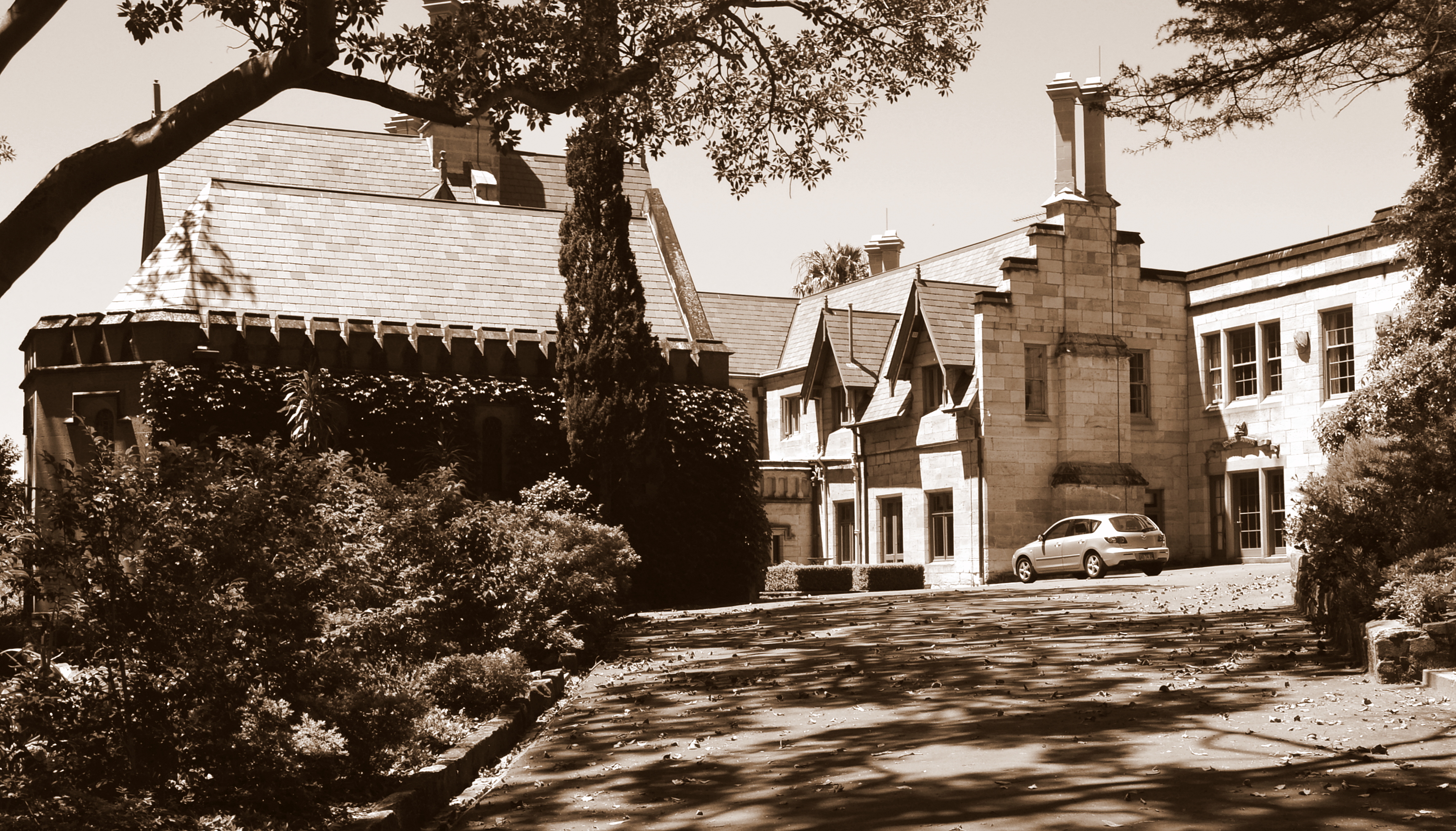
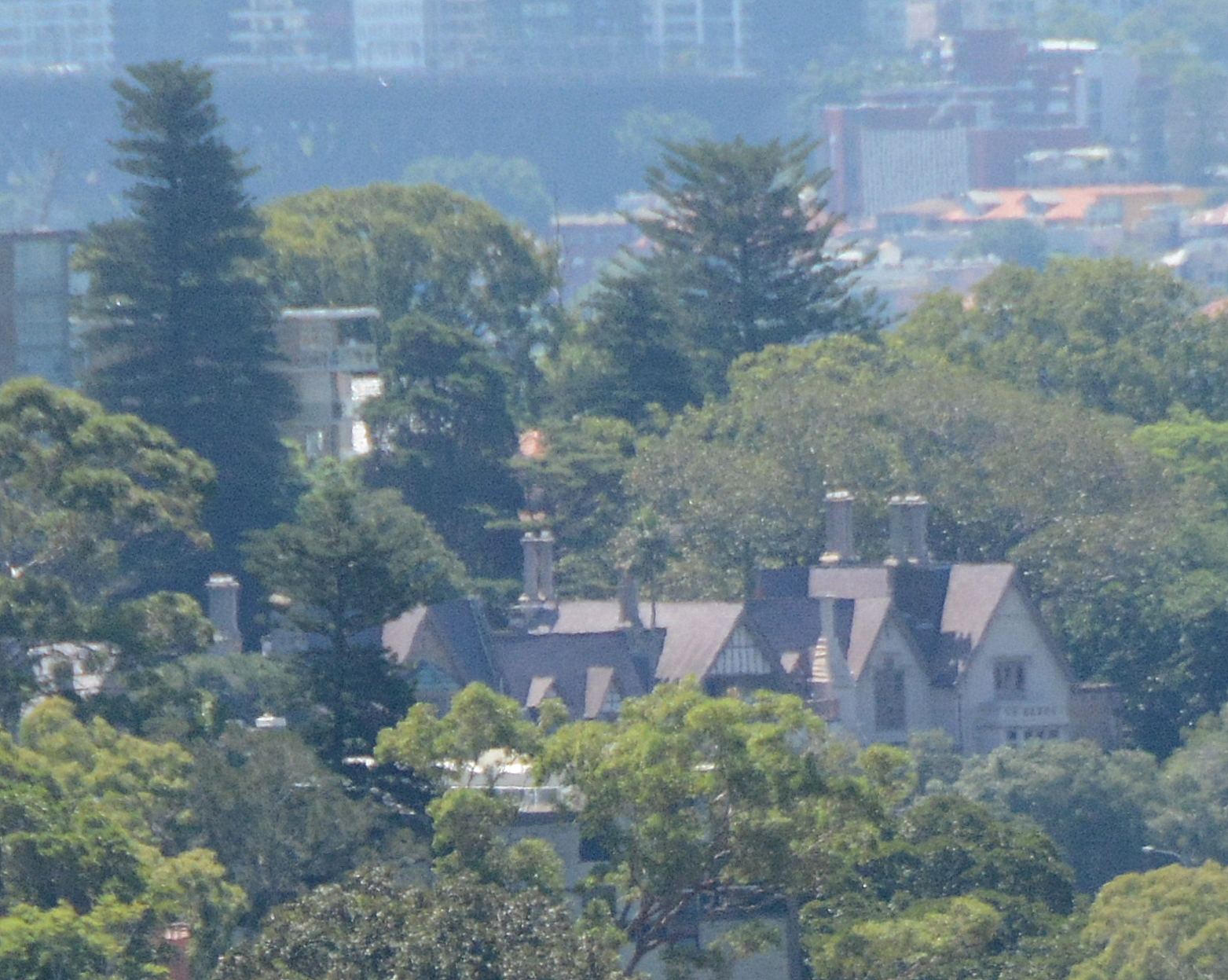
The Sydney residence of Thomas Sutcliffe Mort — pastoralist, dock-builder, and pioneer of refrigeration — set upon two and three-quarter hectares at Darling Point, with gardens then reckoned the finest in the colony.
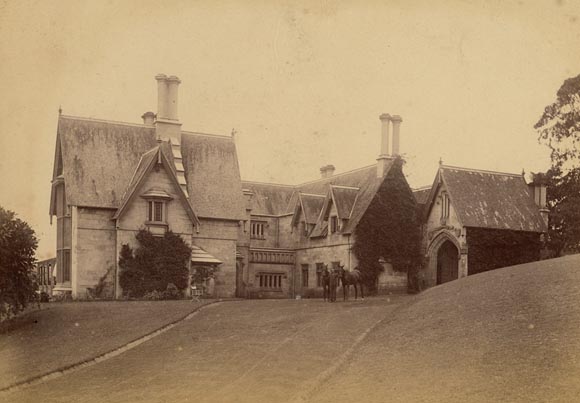
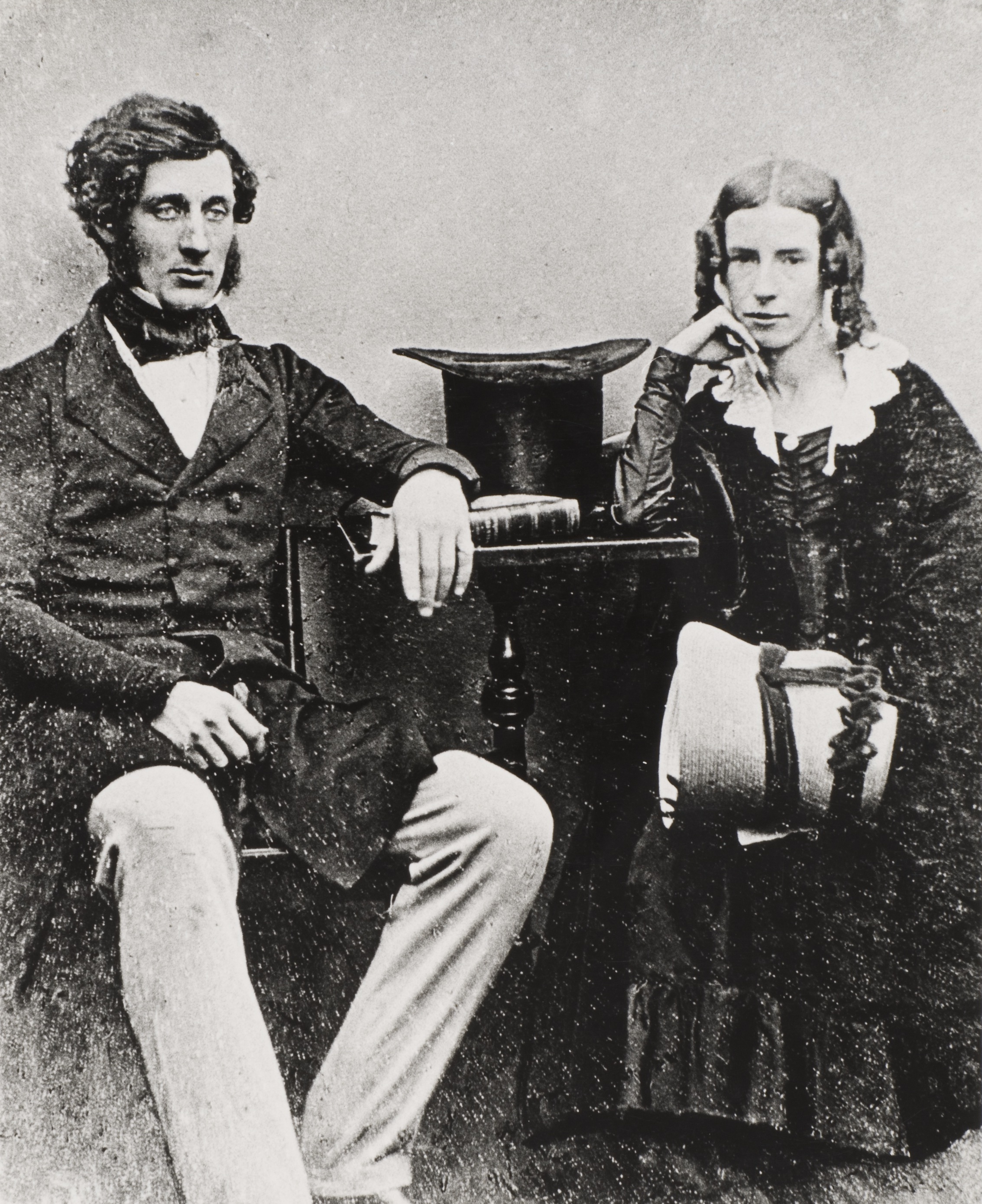
In 1846 Thomas Sutcliffe Mort, then but three years into his Sydney auctioneering business, purchased the ironmonger Thomas Woolley's two-storey sandstone cottage on the eastern slope of Darling Point. Built in 1841 and known as Percyville, the house and its 2.8-hectare allotment were acquired for £2,500 — a sum that, by the standards of the colony, signalled an ambitious establishment.
Mort renamed the property Greenoaks — a spelling he carried throughout his life, occasionally rendered as Greenoakes in the family's own correspondence. The original modest cottage was, between that year and the 1860s, progressively transformed into one of Sydney's most distinguished private houses.
The first hand laid upon the place was that of the architect John Frederick Hilly, who began the conversion to a gentleman's residence in the years immediately following Mort's purchase. In 1859, returning from a long visit to England, Mort engaged the colony's foremost ecclesiastical architect, Edmund Blacket — designer of the University of Sydney — to undertake more substantial Gothic-revival additions, including the celebrated picture gallery in which Mort displayed the paintings, suits of armour and curios he had gathered abroad.
The leading and model private garden in New South Wales. — Horticulture Magazine, 1865
Mort opened both the gardens and the gallery to the public — an act of singular generosity for the time, and one consistent with the character of a man whose commercial life was, in equal measure, a programme of civic improvement.
The ironmonger Thomas Woolley erects a two-storey sandstone cottage on the eastern flank of Darling Point.
Mort purchases the cottage and its 2.8 hectares for £2,500, and renames the property Greenoaks. J.F. Hilly is engaged for the first works of conversion.
The horticulturist Michael Guilfoyle is engaged to design the grounds. Within a decade they are reckoned the finest private gardens in the colony.
Returning from England, Mort engages Edmund Blacket to extend the house in the Gothic taste, including the picture gallery for the collection he has brought home.
Blacket also designs a smaller cottage on the estate — built for the Mort children, and later occupied by his son W.E. Mort. The cottage is destroyed by fire in 1899; a heritage-listed replacement now stands at 2E Greenoaks Avenue.
Mort dies at Bodalla on 9 May. He is buried at the Home Farm, in a spot of his own choosing. His widow, Marianne, continues to reside at Greenoaks.
Greenoaks is sold to the grazier Michael Langtree, who in the years following subdivides much of the original estate. Greenoaks Avenue is opened in 1911.
The Anglican Diocese of Sydney purchases the residence as the official seat of the Archbishop of Sydney. The house is renamed Bishopscourt — the name it bears to this day.
Professor Leslie Wilkinson, first Dean of Architecture at the University of Sydney, designs a new wing — adding a quieter classical note to the Gothic-revival fabric.
The house passes from the Diocese into private hands for $18 million, opening a new chapter in a custodianship now extending well past a hundred and seventy years.
Greenoaks is — uncommonly for a private Sydney house — the work of three of the colony's most considerable architects, each adding a wing and a sensibility of their own across the long evolution of the building.
Surveyor and architect of mid-nineteenth-century Sydney. From 1846 he oversaw the first transformations of Woolley's cottage into a gentleman's residence — the original spine to which all later work was added.
Colonial Architect; designer of the University of Sydney, St Mark's at Darling Point (built upon land gifted by Mort), and the city's leading ecclesiastical works. From 1859 he gave Greenoaks its definitive Gothic-revival character — including the picture gallery.
First Professor of Architecture at the University of Sydney. In 1935 he contributed a further wing — his work elsewhere drawn from the Mediterranean and colonial traditions, here gracefully accommodated to the Gothic fabric of the house.
From 1849 Mort engaged the celebrated horticulturist Michael Guilfoyle — father of William Guilfoyle, later director of the Melbourne Botanic Gardens — to lay out the grounds at Greenoaks. The result, in time, became one of the most admired private gardens in nineteenth-century Australia.
The grounds combined exotic specimens with terraced walks, summerhouses and water features, set against the long view across the harbour. By 1865, Horticulture Magazine pronounced Greenoaks "the leading and model private garden in New South Wales".
Mort opened the gardens to the public — a generosity, like the picture gallery within the house, that placed his estate quietly in the civic life of the colony. Much of the original planting was lost in the subdivisions that followed 1895, though one notable survivor — a stone statue of the Dying Gladiator — remains in the garden of 2D Greenoaks Avenue.
The greatest benefactor that the working classes in this country ever had. — Spoken at the funeral of T.S. Mort, May 1878
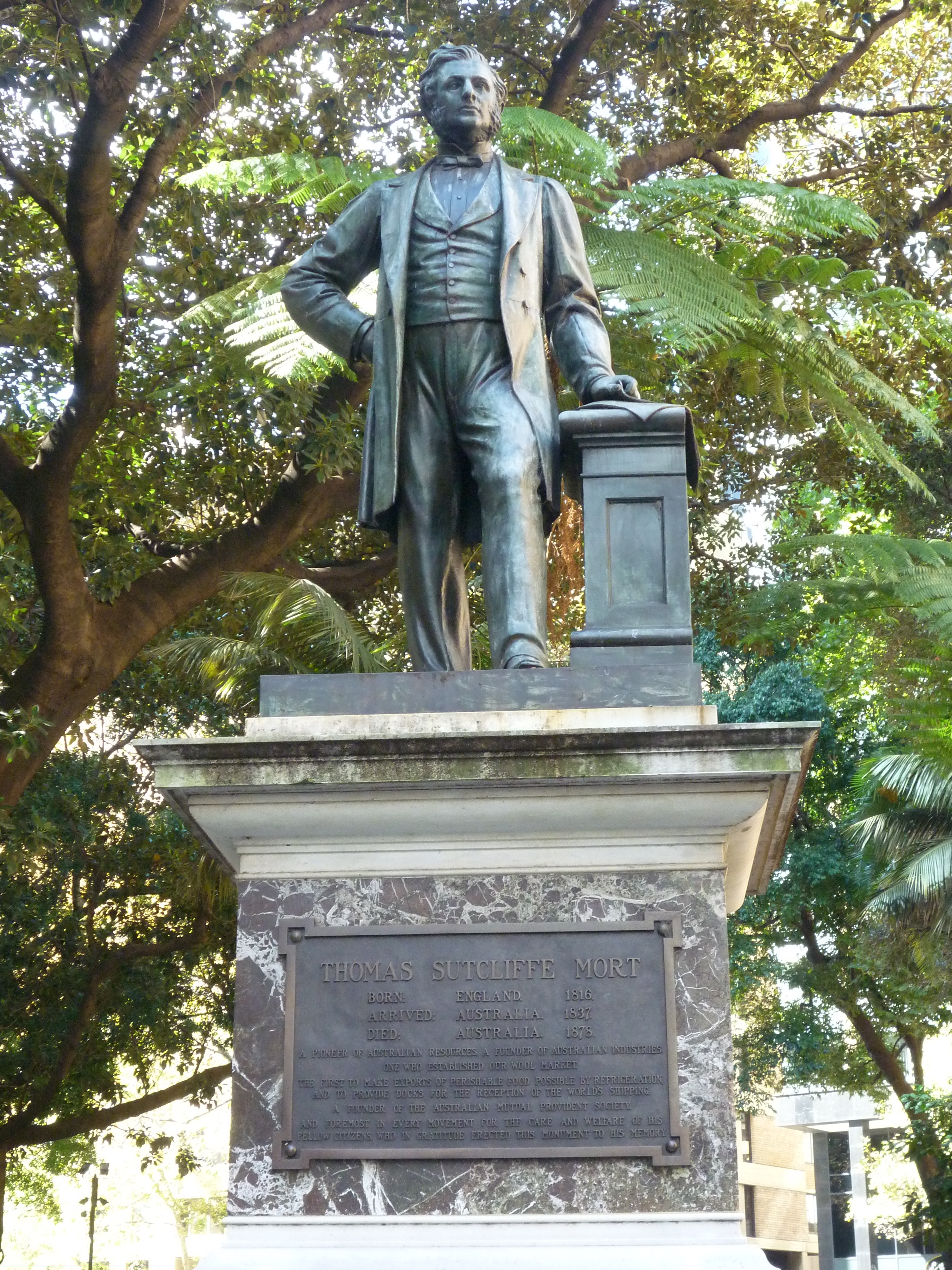
Born at Willowfield in Bolton, Lancashire, on 23 December 1816, Mort sailed for Sydney in 1838 with little beyond letters of introduction. By 1843 he had opened his own auction rooms and held what is generally regarded as the first specialised public wool sale in Australia.
From that beginning came a career almost without parallel in colonial commerce: founding director of the AMP Society (1848); founder of Mort's Dock at Balmain (1854) — Australia's first completed dry dock; pioneer of mechanical refrigeration through his patronage of Eugène Nicolle; and architect of the model dairy settlement at Bodalla.
Greenoaks was, throughout, his Sydney house — and the seat at which he raised his nine children with his first wife Theresa Laidley, whom he married in 1841 at St Lawrence's, Sydney. He kept Bodalla in the country, and Greenoaks in town, until his death in 1878.
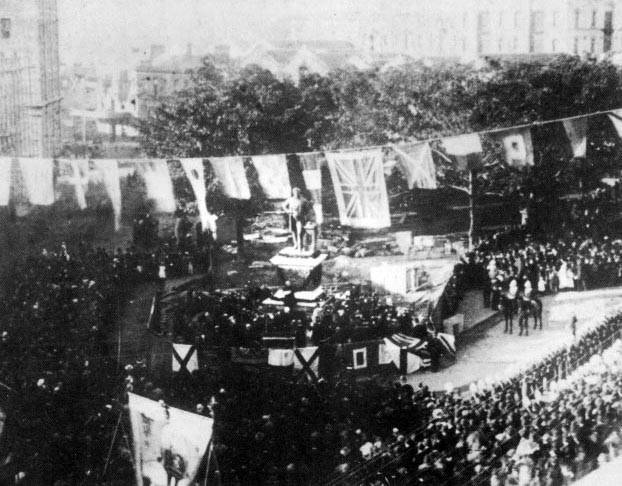
The first public statue erected to any Australian was raised at Macquarie Place in 1883 — to him. It still stands.
Since 1910 the house has been known publicly as Bishopscourt, having served for over a century as the official residence of the Anglican Archbishop of Sydney. It is listed on the New South Wales State Heritage Register, and remains one of the few intact Gothic-revival mansions of its scale in the city.
The original 2.8-hectare estate has, through three successive subdivisions — 1895, 1911 and 2006 — been reduced to a fraction of its original ground, though the principal house and its immediate setting remain. Greenoaks Avenue, opened in 1911 through what was once the southern lawn, takes its name from Mort's house.
This site exists to record the history of Greenoaks and to honour Mort's stewardship of it — alongside the broader documentation of the family's work maintained at Goldsbrough Mort.
NSW State Heritage Register · Local Environmental Plan (Woollahra Municipal Council) · National Trust register.
11A Greenoaks Avenue, Darling Point NSW 2027 · Approximately 4 kilometres east of the Sydney GPO, on the eastern slope of Darling Point.
The residence is private and not open to the public. Greenoaks Avenue itself, however, retains several heritage-listed survivors of the Mort estate that may be viewed from the street.
Greenoaks is one of four sites maintained as the historical record of the Mort family — the firm at the centre, and three places upon which Thomas Sutcliffe Mort's enterprise left a lasting mark.
The holding company for Mort Family Interests — successor in name to the wool houses of 1843 and 1847.
goldsbroughmort.com.au →Australia's first completed dry dock, laid out at Waterview Bay in 1854 — the engineering centre of nineteenth-century Sydney.
mortsdock.com.au →The southern Sydney suburb of Mortdale, bearing the family name — a quieter monument to Mort's commercial reach.
mortsroad.com.au →Australian Mort Provident — the private superannuation vehicle of the Mort family, named in homage to T.S. Mort's founding role at the AMP Society in 1848.
ampsuper.com.au →Historical enquiries — relating to the house, the family, the gardens, or any of the four Mort family sites — are most welcome. Please write to the address opposite.
For commercial, legal or trustee correspondence, please direct your enquiry through Goldsbrough Mort Pty Ltd.